
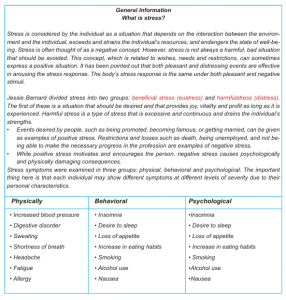
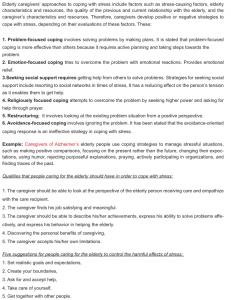
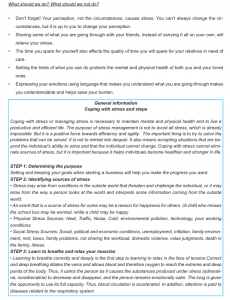
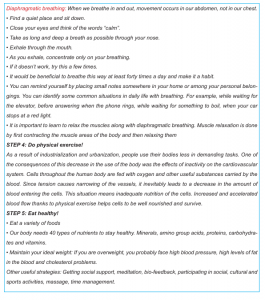
1.2. Stress and Coping
Relatives and caregivers who care for the elderly can be affected by many factors during the caregiving process, including the physical environment in which care is provided, the characteristics of the elderly person receiving care, the strengths or weaknesses of the caregiver, familial and social support resources, and so
ciocultural factors. Characteristics of caregivers can interact with these multifactorial stress factors and turn
the consequences of stress factors into positive or negative ones. In this context, the personality characteris
tics of the caregiver, communication style, whether or not he invests in himself, family communication style,
social support resources, cultural factors, demographic characteristics, and the personality characteristics
and health status of the elderly person, which make it easier for family members and caregivers to cope with stress, lead to different effects.
Negative effects of elderly care on the lives of elderly relatives and caregivers;
1. Lifestyle restriction is the restriction of the lifestyle and activities of family members and caregivers as a
result of caring for the elderly.
2. Deterioration of family members’ relationships with the elderly person receiving care; It occurs due to de velopmental disorders and decline in cognitive and physical functions of the elderly.
3. Deterioration in physical health.
4. Deterioration of mental health.
Elderly care has a positive impact on the lives of elderly relatives and caregivers; caregiver satisfaction and happiness (related to the subjective meaning the caregiver gives to the care service):
1. Caregiving is seen as pleasure, satisfaction, family responsibility, reciprocity, friendship and camaraderie.
2. Positive gains of the caregiving experience include satisfaction with the caregiving role, feeling a sense of pride and pleasure, mastery, competence and sense of success, life being meaningful and purposeful, increasing emotional gains, feeling of mutual care, personal growth and establishing quality relationships with the elderly, socialization with others. development of relationships.
What are the sources and consequences of stress in elderly care?
• Stress factors arising from the physical environment in which care is given consist of the physical
characteristics of the place where the care recipient lives, the physical characteristics of the place where
the caregiver lives, whether or not they stay with the elderly, and the working conditions of the caregiver.
• Stress factors arising from the characteristics of the elderly person receiving care consist of fac
tors such as the elderly person’s cognitive, functional and behavioral disorders, the quality of the previous
relationship with the caregiver, and whether or not they received external professional support.
• Stress factors arising from the caregiver’s characteristics consist of the caregiver’s mental and physical history and current situation, personality traits and coping reactions, roles, financial resources, knowledge about caregiving, and previous relationships with the elderly.
• Stress sources related to socio-cultural context include beliefs and expectations about caregiving, accessible resources, programs, obstacles, access and opportunities.
• Stress factors arising from family and social support networks are whether the caregiver receives concrete, cognitive and emotional support from other people.
• Results: Difficulties in mental health, physical health, social relationships, naintaining roles.
Caregiver Stress Syndrome (CSS):
Caregivers play a vital role in the lives of people unable to care for themselves. Still, caring for others can be
inherently stressful. Caregiver stress, also known as Caregiver Stress Syndrome, is a state of mental, emo
tional, and physical exhaustion caregivers experience. They may also experience:
• Fatigue,
• Stress,
• Ankiety,
• Depression, in some cases.
Caregiver stress syndrome is a condition characterized by physical, mental and emotional exhaustion. It
typically results from a person neglecting their own physical and emotional health because they are focused
on caring for an ill, injured or disabled loved one.
There are a number of factors that can play a role in caregiver stress syndrome. For some caregivers, the
constant demands of caring for a person who has a serious illness can result in burnout. For others, the lack
of boundaries between their roles as a caregiver and a spouse, child, or other loved one can be challenging.
Still other caregivers put unrealistic expectations on themselves, thinking that they can do it all and refusing
to ask for help. This may often be because they don’t want to be a burden on anyone else. Other caregivers
are simply frustrated by the overwhelming needs of their loved one, or the financial and other resources needed to care for someone with a long-term illness or disability.
Caregiver stress syndrome is strongly associated with negative health outcomes. Between 40 to 70% of caregivers suffer from depression, while many caregivers also have anxiety as a result of the stress associatedwith providing care. Anger and irritability are also common symptoms of caregiver stress syndrome. The chronic stress may also lead to high blood pressure, diabetes, and a compromised immune system. Caregiver stress syndrome has a significant impact on the lives of those who take care of their loved ones. It can not
only impact the mood of the caregiver, but his or her long-term health and wellness. These statistics highlight
the magnitude of the problem.Depression and mental health problems are consistently higher among care
givers than among their non-caregiving peers. This is particularly true for caregivers who are charged with
helping someone with cognitive decline. Studies show that 30 to 40% of dementia caregiver suffer from both
depression and emotional stress. Caregivers report that they are stressed and frustrated. 16% of caregivers
are emotionally strained, while 26% state that taking care of their loved one is had on them emotionally. 22%
are exhausted when they go to bed at night. This shows what many people experience firsthand: the challenges of providing care for a loved one.
Caregiving has a substantial impact on the caregiver’s physical health
• 45% of caregivers reported chronic conditions, including heart attacks, heart disease, cancer, diabetes, andarthritis,
• 11% of caregivers state that their role has caused their physical health to decline
• Caregivers have a 23% higher level of stress hormones and 15% lower level of antibody responses thannon-caregivers,
• 10% of primary caregivers report that they are under physical stress from the demands of assisting theirloved one physically,
• Women who spend 9 or more hours a week caring for a spouse increased their risk of heart disease by100%;
• 72% of caregivers report that they had not gone to the doctor as often as they should have; 58% of caregivers state that their eating habits are worse than before they assumed this role;
• Caregivers between the ages of 66 and 96 have a 63% higher mortality rate than non-caregivers of the same age. Symptoms of caregiver stress symptom may include changes in appetite, weight or both; feeling blue, hopeless, irritable, or helpless; withdrawal from friends and family; changes in sleep patterns; getting sick more
often; feelings of wanting to hurt yourself or the person for whom you are caring; loss of interest in activities previously enjoyed; emotional and physical exhaustion; and irritability. If you find yourself displaying any of these symptoms, read on to learn how you can deal with caregiver stress syndrome.
How Caregivers Can Deal with Caregiver Stress Syndrome?
Once you have recognized the signs of caregiver stress syndrome, the next step is to manage it. Having this
condition isn’t unusual — the key is to make your own health a priority so that you can continue to provide care for your loved one.
If you are struggling with caregiver stress syndrome, one of the first things that you can and should do is
to take a break. Contact local agencies, family members, friends, or support groups to set up some respite
care. You may even find someone in your area who is also a caretaker, and is willing to provide care for a few
hours in exchange for you doing the same for him or her. Whatever you work out, use that time to take care
of yourself. Do something that you enjoy, or simply rest and recharge. Next, lighten your load by outsourcing
what you can. There are a number of services available for persons with disabilities and illnesses, such as
meal delivery, transportation, and adult day care. Take advantage of what is available in your area; many of
these services are free or low cost. If you can afford to do so, consider hiring someone to clean or do other
chores for you. Anything that you can do to reduce the physical and emotional toll on your shoulders will help
your overall well-being.