
2.3. Treatment And Medication Follow-Up

The Basics of Safe Medication Use
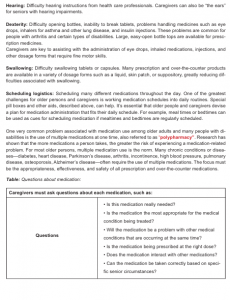
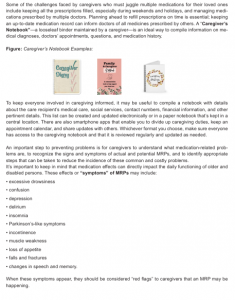
• Keep updated list of all medicines for the person you are caring for. Keep the list with you at all times.
Include prescription drugs, over-the-counter medicines, vitamins, other nutritional products, and herbal
remedies on the list. Share the lists with your doctors or the doctors of the person you are caring for.
• Some caregivers have to prepare and administer injectable medicines, such as insulin. Injections involve
the use of a syringe and needle, which may be inserted under the skin or into a vein or muscle. Be certain
that you understand and are comfortable with preparing the proper dosage and administering the injection.
• Caregivers in doctors offices and pharmacists can and should instruct you on the proper techniques for
injectable medicines.
• Store all of your medications in a designated location in your home. Keep all medications stored together
in one place unless they require refrigeration or are labeled “store in a cool place.”
• Be sure that your medications are stored out of reach of any children that may visit, especially if you have
non-child proof containers. If you are caring for someone with cognitive or memory problems, be sure all
medications are safely stored away.
• Do not mix different medications together in one container; this will make it difficult if not impossible to
identify your medications in an emergency.
• Medicines should be stored in a cool, dry area. Do not store your medications in the medicine cabinet in
the bathroom or in the kitchen because heat and moisture cause deterioration. Instead, store your medications in a designated area in your bedroom, dining room, or living room.
• Medications stored in the refrigerator should be separated from other items in the refrigerator. Consider
keeping refrigerated medications in a plastic box or container in one consistent location in the refrigerator.
• Medications taken by mouth should be kept separate from other items that are for external use only, such
as creams and ointments.
Sharing responsibility
The scope and severity of problems that can occur with medication therapy are tremendous. To prevent
these problems from occurring, caregivers have a responsibility to ensure appropriate, safe, and effective
medication use . For seniors with cognitive impairments, caregivers play a vital role in recognizing changes
in health conditions and effectively describing problems to health care professionals.
In many cases, one child takes on the primary role of caregiver; that role is often filled by the family member that lives the closest or has fewer work obligations. But those elements don’t mean relatives who are pressed for time or who live far away can’t contribute equally. Long-distance caregivers can provide valu
able support when it comes to things like managing finances, booking appointments, arranging services,
gathering information about health services and medications or pitching in financially.
Providing emotional support for both the caregiver and aging family member is another way siblings can
contribute. A simple phone call can make a big difference to someone who needs extra support.