2.7. Falling Risk Prevention
Fall prevention is an important topic to consider as you get older. Physical changes and health conditions —
and sometimes the medications used to treat those conditions — make falls more likely as you age. In fact,
falls are a leading cause of injury among older adults.
It seems like common sense — everybody falls, no matter what age. However, for many older adults, an
unexpected fall can result in a serious and costly injury. The good news is that most falls can be prevented.
As the caregiver, you have the power to reduce your loved one’s risk of falling, and your own fall risk as well.
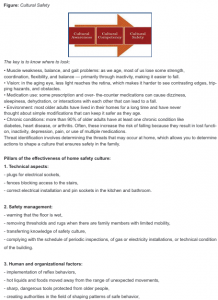
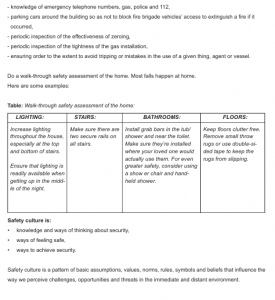
A culture of safety can be developed or neglected in the family. The definition defines safety culture as a
set of beliefs, ideas and values.
Beliefs that:
• Developing enough imagination to be aware of what threats may lead to and what their consequences may be,
• I am responsible not only for myself, but also for other family members.
• Values: Human life and health are valuable in themselves and therefore efforts to protect them make
sense and have deep justification,
• The condition of equipment at home in terms of: appearance, efficiency, quality, cleanliness, so that they
provide satisfaction and the opportunity to impress others, is paramount to ensuring the safety of family members,
• Maintaining order to ensure safety.
Home is the place where people feel safest, but it is there that accidents involving seniors most often occur.
Insufficient attention, lack of imagination or disregard of dangers by adults are the most common causes of
accidents among older people in their own homes. Accidents are not always random events. Many of them
can be predicted and therefore prevented.
Feeling safe Ensuring safety means reducing risk to such a low level that it is acceptable and gives the feeling
of no threat. One of the factors influencing the level of risk is the safety culture. The development of a safety
culture will not completely eliminate threats, but it will help reduce the possibility of a threat occurring and
limit the severity of the consequences of a threat to such an extent that we will feel safe at home among our
family. The comfort of feeling safe at home among the family affects the well-being not only of the family, but
also indirectly of the entire society.
The most common risk factors that can result in a fall:
• Physical risk factors: changes in your body that increase your risk for a fall,
• Behavioral risk factors: things we do or don’t do that increase our falls risk,
• Environmental risk factors: hazards in our home or community.