Preface
Aging is an irreversible life process that lasts from birth to death. In this process, people aged 65 and over are defined as the elderly population. Today, the elderly population is increasing rapidly all over the world and in European countries. According to United Nations Populations Fund (UNFPA) data, the rate of people over the age of 65 in the world was 5.5 in 1974. In 2074, this number is expected to double again to 20.7%, and the number of people aged 80 and over is expected to more than triple (Anadolu Agency, AA,2024). Currently, developed countries have the highest proportion of elderly population, while developing countries often witness rapid population aging. While the aging of the population at the global level is due to improvements in average life expectancy, it is also associated with the decline in fertility rates in many countries (AA, 2024).
Increasing the quality of life of the elderly population has an important place in terms of social welfare. In this context, countries have developed policies to meet the needs of the aging population. Along with quality aging, services for elderly care are also on the agenda due to a number of problems that arise with old age. Aging individuals need help because they have difficulty in providing for their own care. The first is formal care provided by public and private institutions. The other is informal care provided by family members. Caring for elderly people who need care and support is not an easy process for caregivers. While caregivers fulfill these responsibilities, they also face some psychosocial and physical difficulties. A structured, planned and valid support program for family members who play an important role in the care process is needed. This guidebook for caregivers has been prepared to prevent and reduce the social and emotional burdens of family members who care for elderly individuals. Thus, it is aimed to help individuals providing informal care to distinguish the correct information, solve their current problems, and obtain expert information and increase their quality of life.

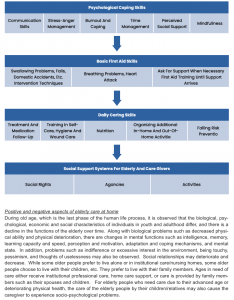
This booklet consists of four basic sections as shown in the diagram below. These sections contain information about psychological skills, basic first aid skills, daily elderly care skills and social support systems in project partner countries that will contribute to the empowerment of caregivers.
What do care givers need?
• Knowledge (about physical and mental health of aged people)
• How will he/she balance her own problems and responsibilities with care work?
• Psychological support
• Communication skills
• Information about where they can get help and support